Liam Moore makes perfume and refuses to take himself seriously while doing it. It is a rare stance in an industry obsessed with mystique and self-importance.
Aquaculture literally means fish farming, and that already tells you enough.
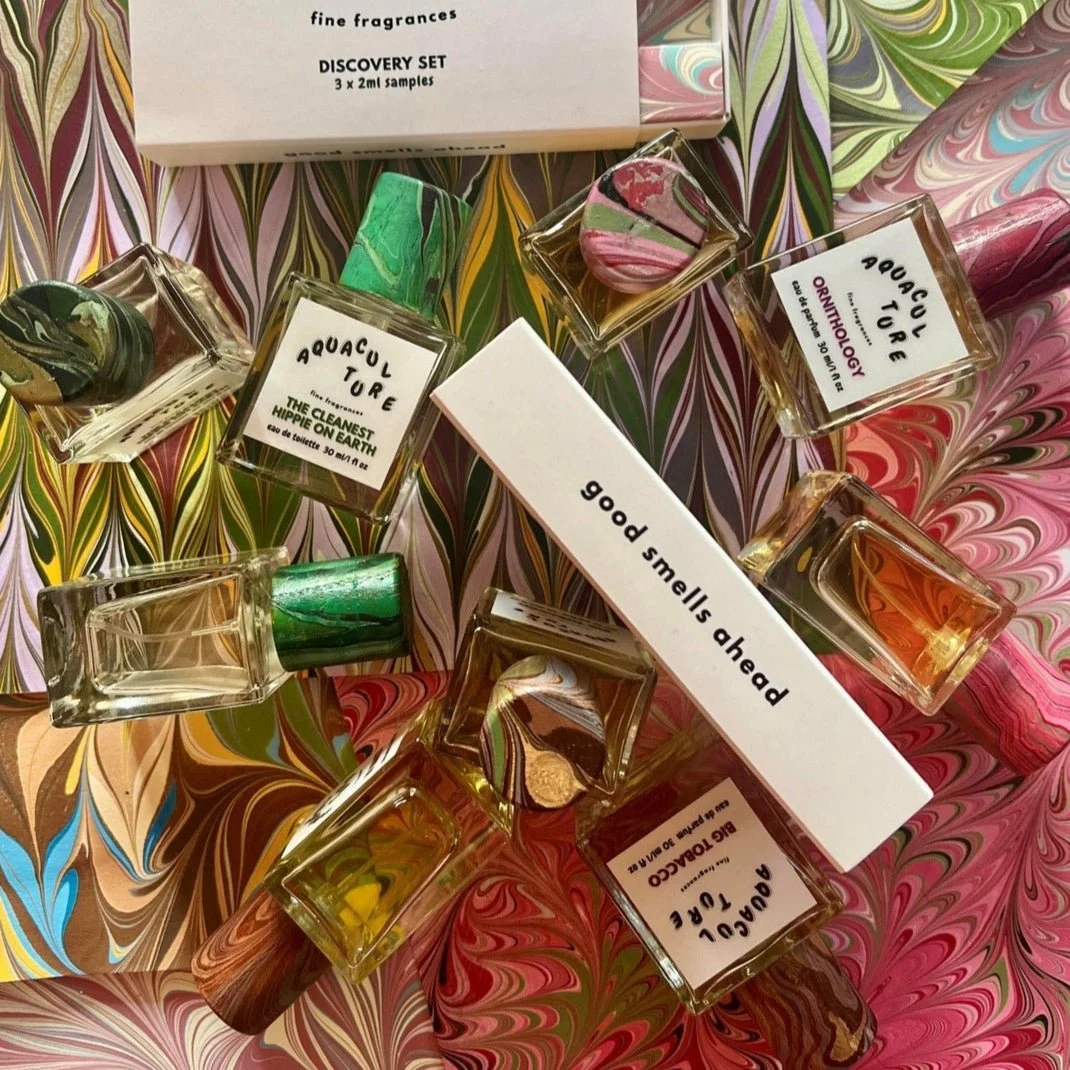
How much of Aquaculture comes from loving perfume and how much comes from being frustrated with it?
It all really comes from fascination. Scent is such an arcane sense and so much of perfumery is shrouded in mystery, even for devoted perfume lovers. Aquaculture started from a desire to learn more about the things that make up the notes in a perfume and discover what each of those things actually smells like.
To be sure, there is frustration and love. There’s gatekeeping, jargon, and a certain colonial extractive aura embedded in Western perfumery. But there’s also so much depth and breadth to perfume, always something to explore or revisit.
“Making perfume is like making magic, an invisible little painting in the air.”
Aquaculture suggests cultivation, systems, maybe even control. Is there something specific you're deliberately trying to grow through it?
Definitely trying to grow something here – I am maybe most interest in the brand’s collaborative potential. I’m trying to grow connections with other artists and explore ways that fragrance can intersect with our lives in ways that it normally doesn’t. I landed on the name Aquaculture because I thought:
a) it sounded badass,
b) The “culture” of Western perfume is rooted in scented “aqua”/acqua/eau/wasser/water, and
c) it literally means fish farming, which is such a terrible name for a perfume company that I couldn’t resist.
You explain things most brands hide. Do you think those omissions are protecting something?
For some, maybe they are protecting their cool factor. I think Aquaculture is cool, but I also think it’s pretty dopey (the whole “fish farming” thing doesn’t help). Aquaculture has a kind of earnestness to it that some brands may be afraid to lean into. Part of that earnestness happens to include wanting to share the lingo and the process and how I feel about it all to let others better connect to it.
But there are a lot of great indie perfume brands out here having fun and getting silly. Many of them are also working in transparency, and doing far more to demand accountability from major industry players and advocate for better acknowledgment and legal protections for perfumers. In a certain sense it’s pushing back against how the perfume industry has historically operated, and I think we’ll continue to see more of it.
Your work feels technically informed but aesthetically irreverent. Is that combination meant to provoke a specific reaction?
I have a toxic need for people to think I’m both funny and smart. Maybe it’s a defense mechanism?
What happens to the magic once someone understands exactly how a scent is built?
There’s always something to learn from smelling another perfumer’s work, or better yet, getting your hands on someone else’s formula and building it yourself.
In the wild, it’s often a guessing game. There are thousands of materials used in perfumery; I can smell something and think “oh that’s a lot of Ambrocenide,” but it could be Ambermax, Amber Xtreme, or any other number of similar chemicals. When I can pick out specific materials in someone else’s perfume or, say, an artificially flavored candy, some part of the illusion might fade a little but it’s still exciting to recognize it, and fun to explore it in context. You might find yourself thinking about the pyrazines in your coffee, or the aldehydes in your cilantro, but it’s also easy for me to turn this off.
I’ve only been studying perfumery for four years; I’ve barely scratched the surface. There are infinite combinations of materials, infinite opportunities to discover new effects, infinite ways to build a scent. The magic so far has only grown.
Is your transparency a principle, or just how you happen to work?
It’s not that I’m on a mission to expose anything about the industry or that it’s a deep principle I’m adhering to; I just want those people who have otherwise encountered barriers to enjoying fragrance to have more ways in.
Your names sometimes feel like inside jokes. Are they meant to include people or filter them out?
Ha. Damn. This certainly appears to directly contradict my insisting that I am in pursuit of accessibility. I’ll admit Ornithology is a bit of an inside joke; it’s named after my partner Phoebe, who was herself named after the bird. Big Tobacco and The Cleanest Hippie on Earth I just thought were funny and weirdly evocative.
How much do people actually care about brand stories, in your view?
I mean, if you trust the ads in my IG feed targeted to startups, people crave a founder origin story, the struggle, the “X things I wish I knew before starting my brand,” etc., etc.
Different people will care about different aspects of a brand: the story, the ethos, the tone, the visual, the product, the packaging, etc. Curators and influencers like a story, because they need a point of view, and the story gives them one jumping off point.
As a new brand, you need to do everything you can to distinguish yourself. We are in a golden age of niche and indie perfume, and scent in general is popping off in a big way and hopefully won’t be slowing down anytime soon. So Aquaculture has a lot of healthy pressure. That said, the indie perfume community does not feel competitive. Indie perfumers are the nicest bunch, incredibly supportive of each other, and seem genuinely interested in talking and learning from one another.
Anyway yeah, you need a brand story – you’re going to have to talk about yourself at some point, and “I make perfume” ain’t gonna cut it.
Is mystique still doing any real work in perfume today, or has it become just habit?
For many people, it’s habit. For others more accurately, it’s ritual. Which in a way circles back to mystique.
A lot of us, me included, are mindless consumers. But often the sort of person who supports independent perfumers is still drawn in by the mystery and the magic.
“As long as there is perfume, there will always be some mystique, like the enchanting scent of a passing stranger.”


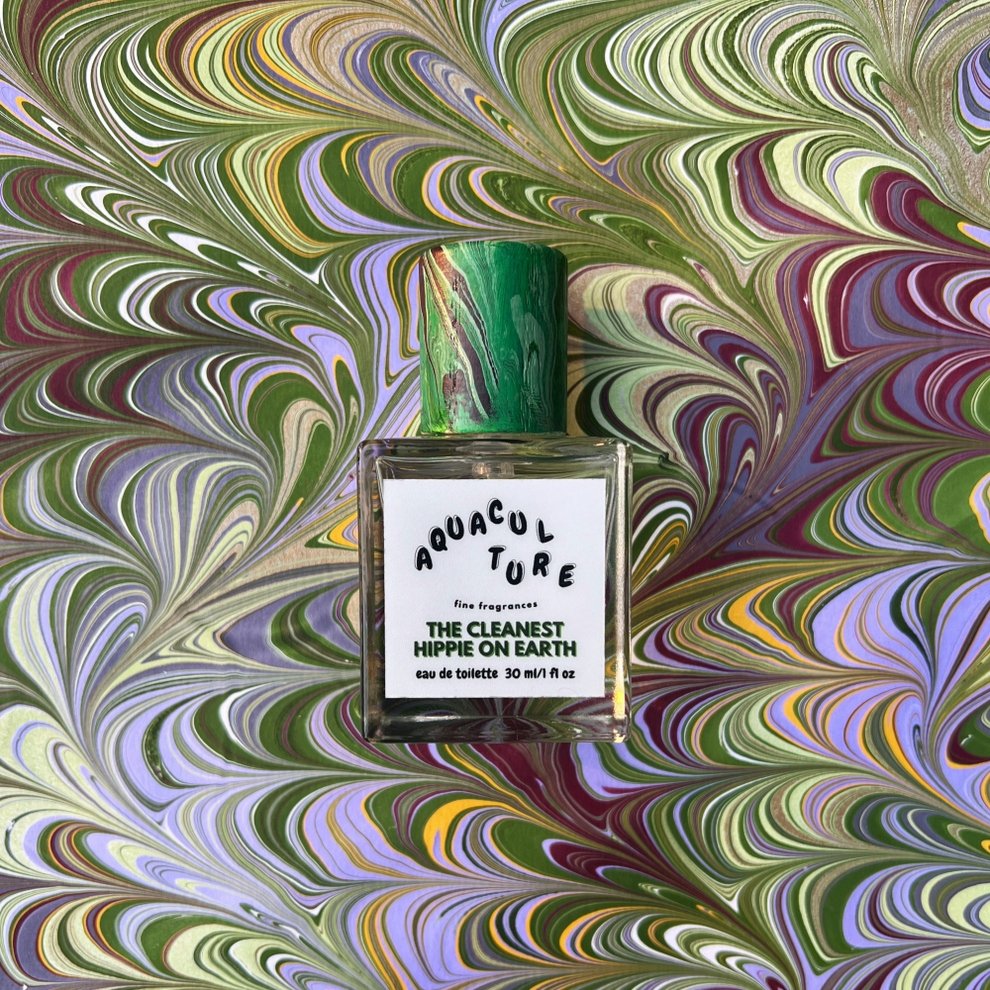
Does the irony ever get in the way of people taking the actual craft seriously: the formulation, the IFRA compliance, the real technical work underneath it?
There are a lot of perfume brands today that operate from a place of irony or irreverence. However, I do feel like I’ve created a barrier between Aquaculture and some of those intentionally “cool” artists or shops out there.
I’m trying to do some pretty goofy stuff and some people are maybe too hip to associate themselves with all that. I totally get it; they have their own brand visions that don’t intersect with mine. But ultimately, it’s just perfume (clothes, cocktails, music, whatever frivolity you traffic in).It can’t possibly be that serious.
As far as the technical aspects go, when I’m doing that work, I’ve got no one to entertain. So the craft, compliance, etc. carries on in pure dull sincerity. No jokes allowed in the Safety Data Sheets.
What does staying a one-person operation actually protect?
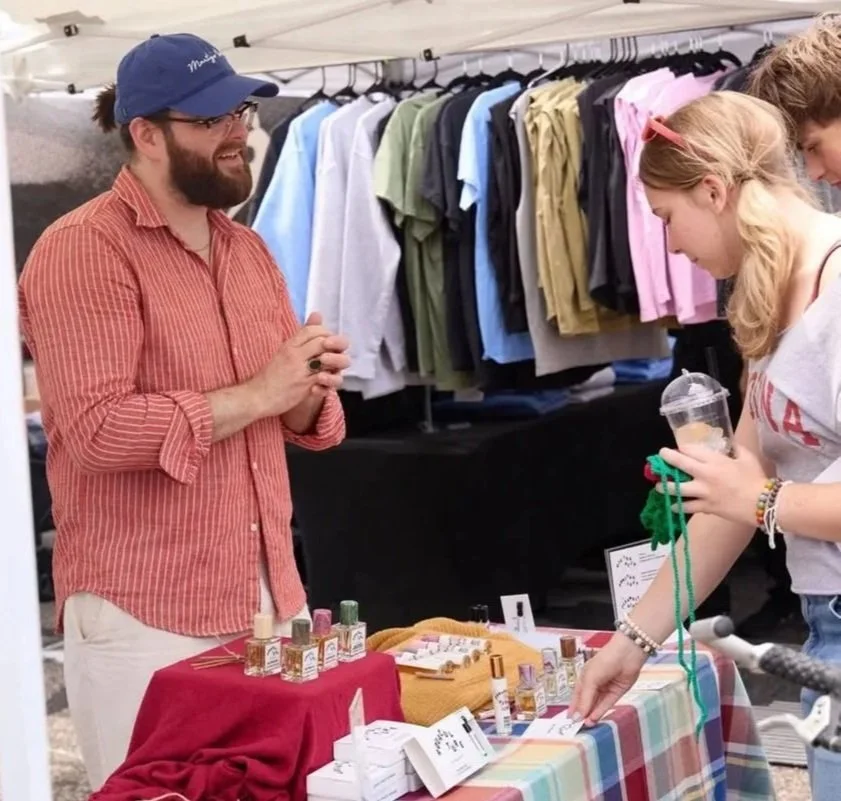
I am admittedly a control freak.
Being largely a one-man show allows me complete control. So it protects my vision for the brand. In a way, it protects my sense of self, inflating my ego when I succeed and tempering it when I fail. As I slowly grow, I want to outsource more of the work. It’s an abomination for one person to be running and executing product development, client development, order fulfillment, finance, operations, marketing, communications, PR, legal, IT, etc., etc.
Thankfully, Phoebe does a lot for the business – “Chief Marbling Officer” we call her, as she does most of the water marbling. She is an enormous help during events. And perhaps most importantly, she also happens to have markedly better executive function, so helps with keeping me on task.
How do you recognize when experimentation becomes self-indulgence?
For me, like many perfumers, it’s just an infinite chase for perfection. A formula can always be modified. It’s too easy to keep editing until it’s bad or worse, boring. The inevitable end to any project is “good enough.” Is this something I would wear? Is this something I would like to smell on someone else? Is this something I would be proud to sell? If the answer is yes, it’s time to wrap it up. Put the perfume in the bottle. Easier said than done, usually.
When designing a scent for a client, this does become a lot easier. You have an outside arbiter who gets to join you in judging when it’s finished. Since you’re your own worst critic, this often means things get done a lot faster.
Has a finished formula ever felt wrong to release? Was there anything that stopped you?
I’ll admit I wasn’t ready for the rollout of Conversation Heart, which is a limited release. I created this perfume for an in-person Scent Gallery this February and aimed to release it by the end of March. I didn’t get orders out til the end of April. There were many aspects of the launch that I bungled, but the worst part may have been not trusting the formula. I kept editing long after it could have been done. I’m happy with where it is now, and glad I gave it more time, but hate that I had to keep telling people it wasn’t ready yet. I’m sitting on another formula right now that has gotten only positive reactions from strangers, but it’s not quite saying what I want it to say. So onto the next draft...
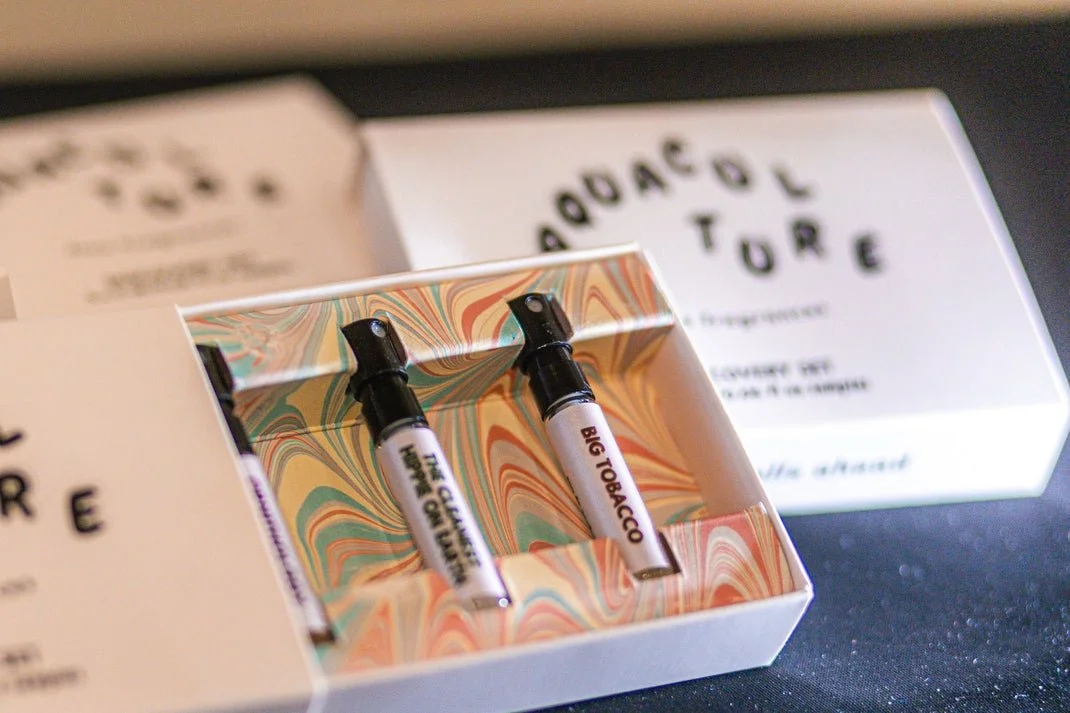
If someone smells your work and thinks "this is weird," how do you interpret that?
Cleanest Hippie probably gets that the most; it is built around patchouli, the most divisive note in perfumery (maybe second behind leather). It also has a kind of unusual structure, a fresh greenish opening that dries into a warm incense hug. So I’m used to getting “weird” comments on that one. Of course, it’s more fun when people smell it and their faces light up, but I don’t mind if someone finds my scents weird. We’ve all got different tastes.
The worst reaction is no reaction. As long as they’ve got something to say, I want to hear it.
Your site is full of jokes and self-deprecation, but you end with "I wish you the best on your olfactive journey," genuinely sincere. Is that sincerity the foundation under everything, or just another layer of the bit?
It’s genuine. I started Aquaculture as a creative outlet, a way to push myself as a perfumer, a way to finance an expensive hobby, and a way to call people in who weren’t interested in fragrance or were intimidated by the jargon.
I didn’t start appreciating perfume until my late 20s. It really is a journey, and I want to make fragrances for everyone, no matter where they are on the path.
Liam gets the joke in before anyone else can, then sits back down at the bench where no one needs entertaining. Control freak, self-deprecating, four years in and still barely scratching the surface, which is exactly what keeps the thing alive.
I wish you the best on your olfactive journey!
